

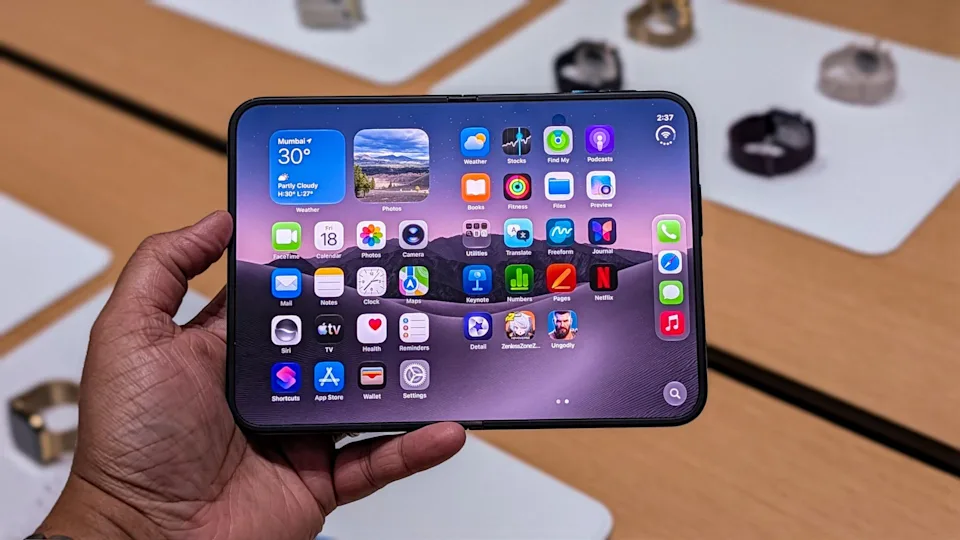
The iPhone Duo goes on sale on 23 October in more than 70 countries, but Nigeria, Kenya, Ghana and South Africa aren’t on Apple’s named launch list, so if you want one this year you’ll be buying it abroad or from imported stock. Pre-orders open on Friday, 16 October at 1pm Nigerian time, and a second wave of 28 countries follows on 30 October.
Most iPhone Duo units you’ll see in Lagos, Nairobi or Accra in the first few months will come from the UAE, the UK or the US, either through a relative, a trip to Dubai or a local seller. That route can work well, but the iPhone Duo has no SIM slot and costs more to repair than a normal iPhone, so start with the checks below before you commit to one.
Check where the iPhone Duo is launching first
Apple’s announcement names 18 first-wave countries, including Australia, Brazil, Canada, China, France, Germany, India, Japan, Singapore, the UAE, the UK and the US. Apple hasn’t named the rest of the first wave or any of the 28 countries in the second wave, so you won’t know whether an African market is included until Apple publishes that list.
| Market | Launch | Starting price (256GB) |
|---|---|---|
| United States | 23 October | $1,999 |
| Germany | 23 October | €2,299 |
| India | 23 October | ₹2,99,900 |
| Australia | 23 October | A$3,499 |
| UAE | 23 October | Not yet confirmed |
| Nigeria | Not on the named list | No official price |
| Kenya | Not on the named list | No official price |
| Ghana | Not on the named list | No official price |
| South Africa | Not named, second wave unconfirmed | No official price |
In the US, the 512GB model costs $2,199, the 1TB model $2,599 and the 2TB model $3,199, according to MacRumors. The two colours are Star White and Night Sky.
Any naira, shilling or cedi price you see before stock arrives is an estimate. Kenyan retailer City Hub Electronics has said it won’t quote a figure until import duty, VAT and clearing costs are known. Early stock is expected to be very limited, so launch-week prices from local sellers will usually be well above what the phone settles at later.
Know what the iPhone Duo gives you before you pay foldable money
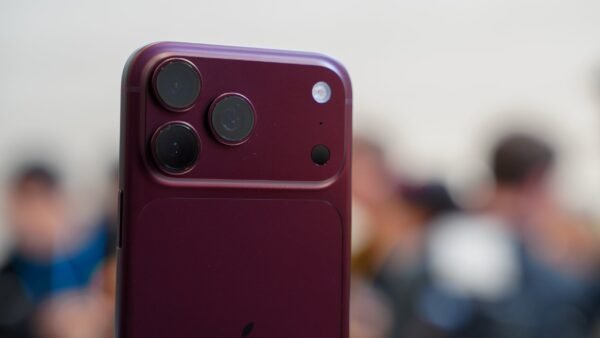
The iPhone Duo is a book-style foldable with a 5.4-inch outer screen and a 7.6-inch inner screen. Both screens use the same aspect ratio, so apps keep their layout when you open the phone. It runs the same A20 Pro chip as the iPhone 18 Pro, uses Apple’s C2 modem and has a titanium frame. Apple rates it IP68, tested to 6 metres for 30 minutes, which is a stronger water rating than most foldables carry.
You unlock it with Touch ID on the side button. The back has a 48MP main camera and a 48MP ultrawide, and the front camera sits under the inner display. It doesn’t have a telephoto lens, LiDAR or the variable-aperture main camera from the iPhone 18 Pro, so if the camera is your main reason for buying a premium iPhone, the iPhone 18 Pro Max is still the better choice.
Apple claims up to 31 hours of video playback on the inner screen, 44 hours on the outer screen alone and 24 hours when you use both equally, as reported by Tom’s Guide, with a 50 percent charge in about 20 minutes. Apple hasn’t published the battery capacity or the RAM, so treat any figure you see for either as unconfirmed.
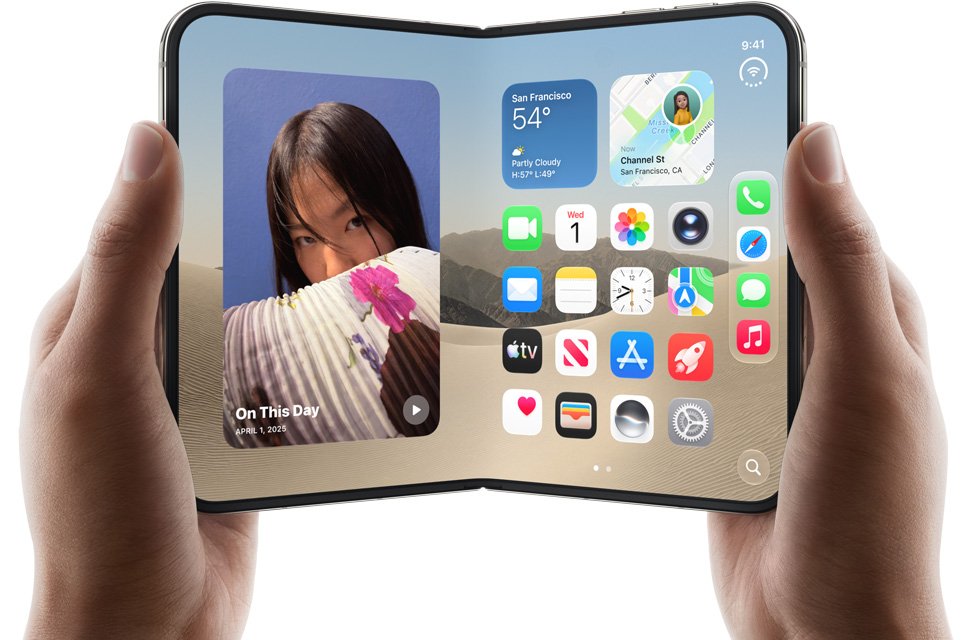
Make sure the iPhone Duo will take your MTN, Airtel or Safaricom line
Every iPhone Duo is eSIM-only, whichever country it’s bought in. It supports two active lines and can store eight or more eSIMs. In Nigeria, MTN, Airtel, Glo and T2 (the current name of 9mobile) all offer eSIM, and so do Safaricom and Airtel in Kenya and the main networks in Ghana and South Africa. The setup steps are the same ones in our guide to using an eSIM-only iPhone in Nigeria.
The part to check is the carrier lock. A US iPhone bought on an AT&T, Verizon or T-Mobile deal can be tied to that network, and because the iPhone Duo has no SIM slot to fall back on, a locked unit simply won’t accept your local eSIM. Open Settings > General > About and scroll to Carrier Lock. You want it to read No SIM restrictions.
Don’t pay for an iPhone Duo until Carrier Lock reads No SIM restrictions, because a locked unit can’t be used on any African network. If a relative in the US is buying it for you, ask them to buy it unlocked directly from Apple rather than through a carrier deal.
| What to check | Where to find it | What you want to see |
|---|---|---|
| Carrier lock | Settings > General > About > Carrier Lock | No SIM restrictions |
| Previous owner’s eSIM | Settings > Cellular | No old lines left on the phone |
| Find My | Settings > [your name] > Find My | Signed out of the seller’s Apple Account |
| Parts history | Settings > General > About > Parts and Service History | No replaced or unknown parts on a phone sold as new |
Buying an iPhone Duo in Dubai makes the most sense for many African buyers
The UAE is in the first wave, and UAE-bought iPhones are generally sold unlocked, which removes the biggest risk with US stock. If you already travel to Dubai or know someone who does, it’s usually the simplest way to get a genuine, unlocked iPhone Duo early.
Be careful to work out the full cost before you buy. The phone price, any duty you have to pay on arrival and the cost of the trip itself all count, and you should declare the phone at customs if your country’s rules require it. If the trip is only for the phone, waiting for stock to settle locally is usually the cheaper option.
Repairs are the real risk with an imported foldable
On a normal iPhone, a cracked screen is annoying but fixable. On the iPhone Duo, the inner display and hinge are the most expensive parts of the phone, and Apple hasn’t published repair prices for them yet. Authorised service providers in countries where Apple doesn’t officially sell the Duo may not stock its parts at all.
Before you import one, check whether Apple’s warranty and any AppleCare+ plan you buy will be honoured where you live, and ask your nearest authorised service provider directly whether they’ll repair an iPhone Duo. Don’t rely on a random repair shop for the inner screen, because a poor replacement on a foldable can affect the fold, the touch layer and the water resistance at the same time.
It’s also worth remembering that this is Apple’s first foldable. Early units of any new design tend to show durability issues that later batches fix, and the first few months of owner reports will tell you a lot about how the hinge and crease hold up.
What to do first if you want an iPhone Duo this year
If you have a reliable way to buy an unlocked unit in the UAE, the UK or the US, and you’re comfortable with limited repair options at home, you can pre-order on 16 October. Confirm the carrier lock, check the previous owner’s details are gone if it isn’t brand new, and set up your eSIM at your network’s service centre as soon as the phone arrives.
If you’re relying on local sellers, wait until Apple names the 30 October countries and launch-week prices come down. The practical aim isn’t to get the iPhone Duo first. It’s to get an unlocked, genuine unit at a fair price that you can actually get repaired where you live.



1 comment
[…] Best Phones iPhone Duo in Nigeria and Africa: Launch Date, Prices and What to Check Before You Buy September 23, 2026 […]