

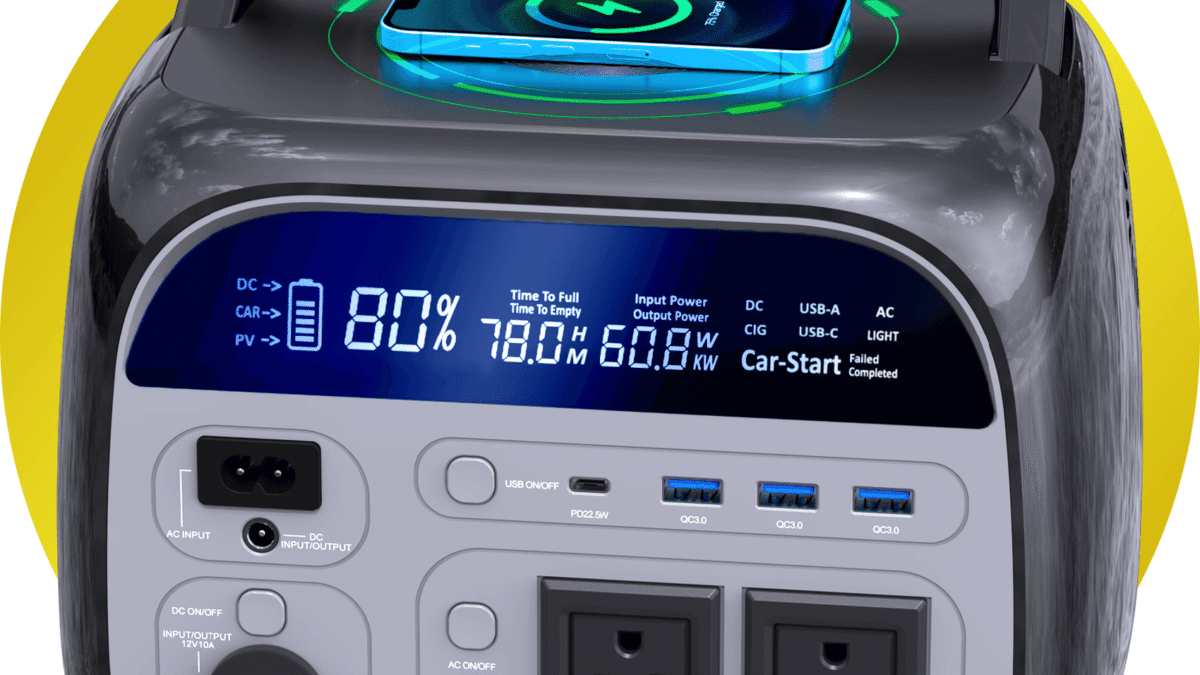
A portable power station in Nigeria is sized by its watt-hour (Wh) capacity and its continuous output in watts, and those two numbers decide far more about how long your router, laptop, fan or TV will stay on than the brand name or the price tag. Most buyers who end up disappointed didn’t buy a bad unit. They bought one that was too small for what they wanted to run, or one that can’t recharge fast enough in the few hours of grid supply they actually get.
The good news is that you don’t need an electrician to get this right. Add up what you plan to power, check a handful of specs on the box or the manufacturer’s page, and you’ll know within minutes whether a unit fits your home, your office desk or your shop. There’s no single reliable naira price we can quote here, because prices shift with the exchange rate and between official and grey stock, so use the checks below to judge any offer you’re given.
Work out your watt-hours before you look at any portable power station in Nigeria
Start by listing the devices you want to keep running and their wattage, which is printed on the adapter or the label on the back. A Wi-Fi router usually draws somewhere around 10 to 20 watts, a laptop on charge can pull 45 to 65 watts or more, a standing fan often sits around 50 watts, and a small LED TV typically uses a few dozen watts. Add those figures together to get your load.
Next, divide the station’s watt-hour rating by that load, then knock off roughly 15 percent to allow for losses in the inverter. A 1,000Wh unit running a router, a laptop and a fan (about 125 watts together) should last somewhere near six and a half to seven hours, which is enough to carry most people through an evening outage. If you want the same setup to last a full night, you’re looking at a bigger battery or a smaller list of devices.
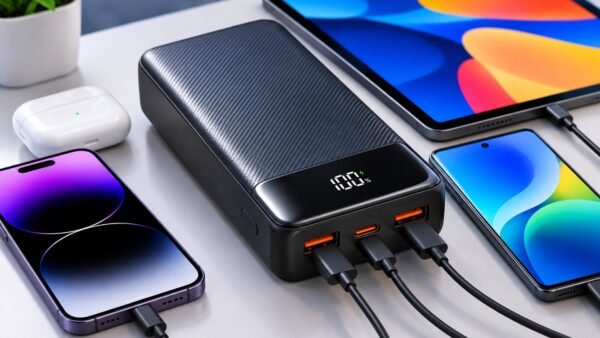
Be careful with sellers who quote capacity in mAh. That figure depends on the internal battery voltage and isn’t comparable between products, which is the same trap covered in our guide on checking whether a power bank actually holds what it claims. Watt-hours are the number that tells you how much energy you’re really getting.
Fridges and freezers are where most power stations fall short
Appliances with a compressor or a motor need a burst of power when they start, and that surge can be several times their normal running wattage. A station rated for 600 watts continuous might run a small fridge once it’s going but trip the moment the compressor kicks in. Check both the continuous output and the surge or peak rating, and if a fridge or freezer is on your list, ask the seller to show you the exact model’s surge figure on the manufacturer’s spec sheet.
You also want a pure sine wave inverter. Modified sine wave output can make fans hum, stress some chargers and cause trouble with sensitive electronics, and most reputable portable power stations now list pure sine wave output clearly. If the box or listing doesn’t say, treat that as a warning sign.
LiFePO4 batteries cost more upfront but last far longer
Most newer power stations use lithium iron phosphate (LiFePO4) cells, and manufacturers usually rate them for thousands of full charge cycles before capacity drops noticeably. Older or cheaper units may use NMC lithium-ion cells, which are lighter but are typically rated for far fewer cycles. In a country where your power station may cycle every single day, that difference decides whether the unit is still useful in its third year.
Pros
- Usually rated for thousands of charge cycles
- More thermally stable than NMC cells
- Better suited to daily use during long outages
Cons
- Heavier for the same capacity
- Often priced higher than NMC units
- Capacity still falls over time, just more slowly
Recharge speed matters as much as capacity when NEPA gives you a few hours
A big battery is only useful if you can refill it in the window you have. Look for the AC charging time on the spec sheet, because some units can go from empty to nearly full in about an hour while others take several hours. If your area gets short bursts of supply, fast AC charging will do more for you than an extra few hundred watt-hours.
If you plan to add solar panels, check the maximum solar input in watts and the accepted voltage range, then make sure your panels fall inside it. Panels that exceed the voltage limit can damage the charge controller, and panels that fall well below the wattage limit will simply charge slowly. Some units also offer a UPS or EPS mode that switches to battery when the grid drops, which is handy for keeping a home 5G router or a desktop PC online, but check the stated switchover time before relying on it for sensitive equipment.
Warranty and after-sales support separate a good deal from a risky one
Ask the seller who handles warranty claims in Nigeria and whether the unit came in through the brand’s official distributor. Grey imports can be cheaper, but if the battery or inverter fails, you may be left shipping a heavy unit abroad or relying on a repair shop that can’t source parts. Keep the receipt, photograph the serial number and confirm the warranty period before you pay.
The practical aim isn’t to buy the biggest power station you can afford. It’s to match the capacity, surge rating and charging speed to the devices you really need during an outage, so the unit covers your evenings reliably for years. If a laptop is one of those devices, our guide to choosing a laptop for university in Nigeria is worth a look, since a more efficient laptop stretches every watt-hour further.





Join the conversation