

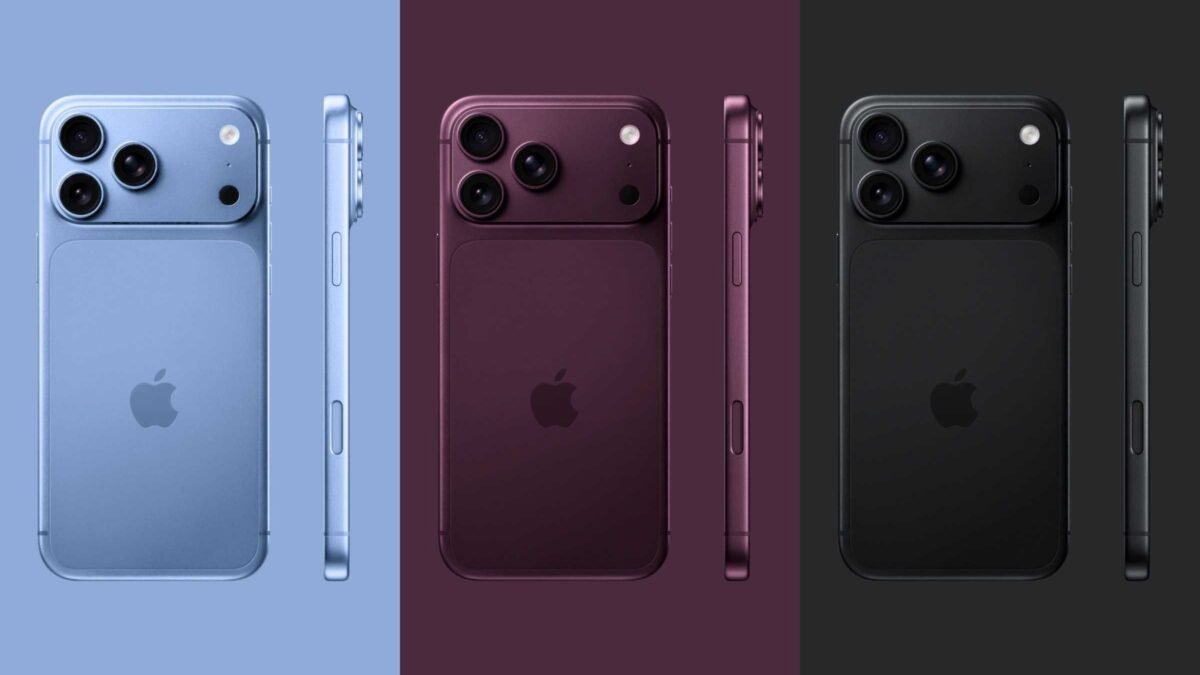
The iPhone 18 Pro and iPhone 18 Pro Max went on sale on 18 September, and any unit bought in the US, Canada, Japan or the Gulf comes without a SIM card slot. Apple sells eSIM-only versions in 12 markets, including the United Arab Emirates, Saudi Arabia and Qatar.
Those are the same places many iPhones reaching Nigeria, Ghana and Kenya come from, whether a relative abroad buys one for you or you pick up US or Dubai stock from a local seller.
An eSIM-only iPhone does work in Nigeria, and on the main networks in Kenya, Ghana and South Africa too. Whether yours will work comes down to a carrier lock setting you can check in under a minute, and there are a couple of day-to-day changes you should know about before you commit to a phone with no slot.
Is your iPhone one of the eSIM-only models?
Apple has been removing the SIM tray one market at a time since the iPhone 14, which was eSIM-only in the US from launch. This year’s list of eSIM-only markets is identical to last year’s, and Apple’s new foldable, the iPhone Duo, has no slot in any market at all.
| Model | Has no SIM slot when bought in |
|---|---|
| iPhone 18 Pro and 18 Pro Max | US, Canada, Mexico, Japan, UAE, Saudi Arabia, Qatar, Kuwait, Oman, Bahrain, Guam, US Virgin Islands |
| iPhone 17 Pro and 17 Pro Max | The same 12 markets |
| iPhone Duo | Every market worldwide |
| Any iPhone from the 14 series onwards | United States |
Phones bought in the UK, Europe and most of Asia still come with a nano-SIM tray as well as eSIM. That means a UK-used iPhone 17 Pro and a US-used one can look identical on the counter and behave completely differently once you try to put your line in.
Look at the side of the phone before anything else
Check along the side of the frame for the small pin hole of a SIM tray. If there isn’t one, you’re holding an eSIM-only phone. You can also confirm where it was sold by going to Settings > General > About and checking the model number, where US units end in LL/A and Japanese units end in J/A.
The setting that decides whether it works on MTN, Airtel or Safaricom at all
Many iPhones sold in the US are tied to a carrier such as AT&T, Verizon or T-Mobile until the contract is paid off. On a phone with a SIM tray, that’s an inconvenience. On an eSIM-only phone it’s a dead end, because the phone will refuse an eSIM from any other network and there’s no slot to fall back on.
Go to Settings > General > About and scroll down to Carrier Lock. It needs to read No SIM restrictions. If it shows anything else, the phone is locked, and you shouldn’t pay for it until the seller can show you that line reading No SIM restrictions.
While you’re in settings, check that the previous owner’s eSIM has been deleted under Settings > Cellular and that Find My has been switched off. A phone still tied to someone else’s Apple Account will ask for their password after a reset, and you won’t be able to get past that screen.
Which African networks will give you an eSIM
| Country | Networks offering eSIM |
|---|---|
| Nigeria | MTN, Airtel, Glo, 9mobile (T2) |
| Kenya | Safaricom, Airtel, Jamii Telecommunications |
| Ghana | MTN, Telecel, AirtelTigo |
| South Africa | Vodacom, MTN, Cell C, Telkom |
These operators appear on Samsung’s Africa eSIM carrier page, last updated on 19 September, with MTN South Africa listed on Holafly’s worldwide carrier list.
In Nigeria, eSIM activation is free on all four networks, but you can’t do it online. You visit a service centre with the phone and a valid ID, the agent verifies your NIN and takes your IMEI, and you’re given a QR code. Keep the phone connected to Wi-Fi, go to Settings > Cellular > Add eSIM (it shows as Mobile Service on some regional versions), and scan the code. Most networks treat this like a SIM swap, so your old physical SIM stops working once the eSIM goes live.
If you run two lines, say MTN for calls and Airtel for data, both need converting. An eSIM-only iPhone runs two eSIMs at the same time rather than one SIM and one eSIM, so each number has to go through the same process.
What changes when you no longer have a SIM to pull out
The biggest difference is moving your number. With a physical SIM you pop it out and put it into another phone in seconds. With eSIM, if your iPhone is stolen, breaks or goes in for repair, getting your line onto a backup phone usually means another trip to a service centre for a fresh QR code. If you lean on a cheap backup handset whenever your main phone is out of action, that’s worth factoring in.
The trade works in your favour on security, though. Apple has promoted eSIM as the safer option since the iPhone 14 because it can’t be removed from a lost or stolen phone, which makes it much harder for someone to walk away with your number in another handset.
The US and Dubai versions carry a bigger battery
Apple uses the space the SIM tray would take up for a larger battery. Apple’s EU energy labels list the iPhone 18 Pro with a SIM tray at 4,056mAh and the Pro Max at 5,391mAh. A teardown published on 20 September puts the eSIM-only versions at 4,288mAh and 5,567mAh, which works out to roughly 6 percent more on the Pro and 3 percent more on the Pro Max.
One catch applies to the US Pro Max specifically. It’s the only iPhone 18 Pro Max running a Qualcomm modem instead of Apple’s own C2, and early reports suggest it draws more power, which could cancel out part of that advantage. Whichever version you buy, check its 5G bands against your network as you would with any imported phone, especially since 5G coverage still varies widely across African markets.
When the eSIM-only version is the better buy
If the Carrier Lock screen reads No SIM restrictions, an eSIM-only iPhone 18 Pro is a perfectly good buy in Nigeria, Kenya, Ghana or South Africa, and you get a slightly bigger battery on top. It suits you best if you stick to one phone, live within reach of a service centre and rarely move your line between devices.
The version with a SIM tray makes more sense if you switch phones often, depend on a backup handset during repairs, or live far from the nearest MTN, Airtel, Glo or Safaricom office. If you haven’t yet decided whether the iPhone 18 series is worth the money at all, settle that question before you start comparing variants.


Join the conversation