

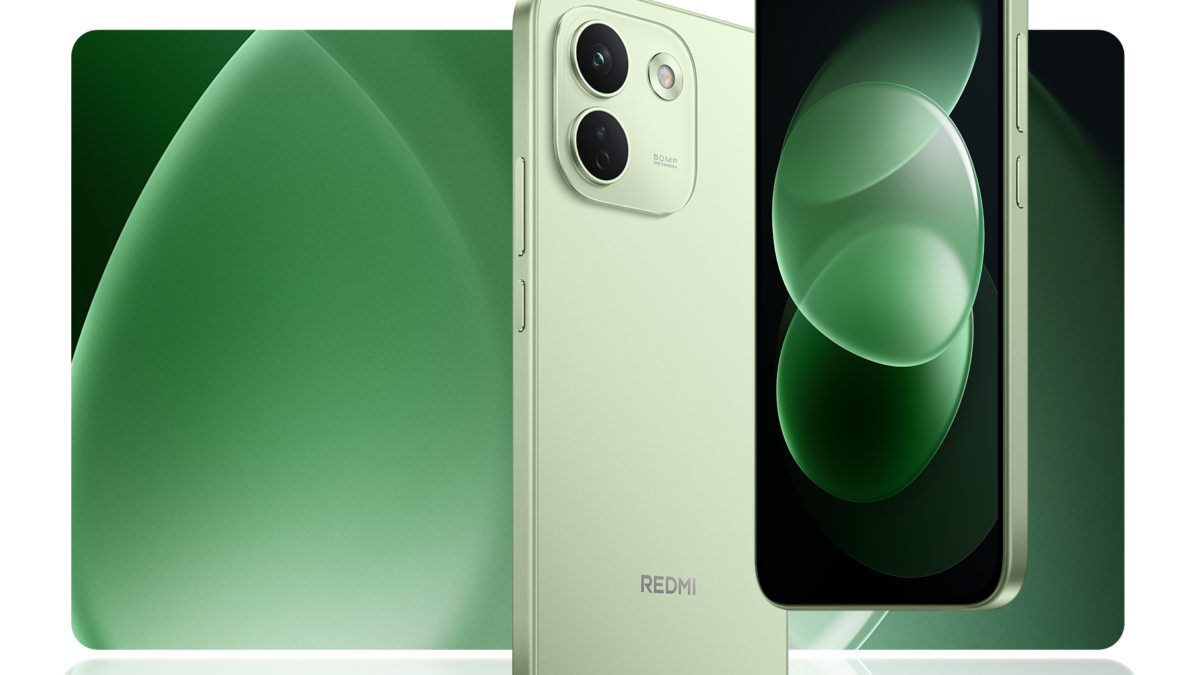
Xiaomi brought the Redmi Note 17 series to Nigeria in the first week of October 2026, and the Redmi Note 17 Pro Max is the one most buyers will reach for first, with a 10,000mAh battery, 100W wired charging and a Snapdragon 6 Gen 5 chip. Xiaomi Nigeria said the phones are sold through its authorised retail partners, but the launch didn’t come with official naira prices, so you’ll be comparing shop listings that can differ a lot from one seller to the next.
The detail that should decide which box you pick up is buried in Xiaomi’s own Redmi Note 17 Pro Max spec sheet. On both the Pro Max and the cheaper Redmi Note 17 Pro, the 128GB versions use older UFS 2.2 storage, while the 256GB and 512GB versions get UFS 4.1 on the Pro Max and UFS 3.1 on the Pro. Storage speed shapes how quickly apps open, how fast photos and videos save and how long updates take to install, which is why the 128GB Pro Max is the version to skip.
| Features | Redmi Note 17 Pro Max 5G | Redmi Note 17 Pro 5G |
|---|---|---|
| Chipset | Snapdragon 6 Gen 5, 4nm | Snapdragon 6s Gen 4, 4nm |
| RAM | 8GB or 12GB LPDDR5X | 6GB, 8GB or 12GB LPDDR4X |
| Storage | 128GB (UFS 2.2), 256GB or 512GB (UFS 4.1) | 128GB (UFS 2.2), 256GB or 512GB (UFS 3.1) |
| Display | 6.83-inch 1.5K AMOLED, 120Hz, 3,500 nits peak, HDR10+ and Dolby Vision | 6.83-inch 1.5K AMOLED, 120Hz, 3,500 nits peak |
| Main Camera | 50MP with OIS + 8MP ultra-wide, 4K video | 50MP with OIS + 8MP ultra-wide, 1080p video |
| Front Camera | 32MP, 4K video | 16MP, 1080p video |
| Battery | 10,000mAh silicon-carbon | 8,340mAh silicon-carbon |
| Charging | 100W wired, 27W reverse wired | 67W wired, 22.5W reverse wired |
| Operating System | Xiaomi HyperOS 3, 6 years of security updates | Xiaomi HyperOS 3, 6 years of security updates |
| SIM | Dual nano SIM or nano SIM + eSIM | Dual nano SIM or nano SIM + eSIM |
| Water Resistance | IP66, IP68, IP69 and IP69K | IP66, IP68, IP69 and IP69K |
| Weight | 229.5g | 223g |
The 128GB Redmi Note 17 Pro Max saves money in the wrong place
You’re paying for a Pro Max to get the faster chip and LPDDR5X memory, and pairing that with the slowest storage Xiaomi offers in the range undercuts both. The gap shows up in everyday things like opening a heavy app for the first time, saving a burst of photos or installing a large HyperOS update. Space runs out quickly too, because WhatsApp media, 4K clips from the main camera and offline movie downloads all live on the same 128GB.
Xiaomi promises six years of security updates for the phone, so you could still be using it in 2032. Storage that’s both small and slow ages badly over that kind of stretch, which is why the 8GB/256GB Pro Max is the sensible starting point. If that’s beyond your budget, don’t settle for the 128GB Pro Max without at least comparing it with a 256GB Redmi Note 17 Pro, which keeps the same screen, the same main camera and the same water and dust ratings on faster UFS 3.1 storage.
What the extra money buys you over the Redmi Note 17 Pro
Battery is the headline. The Pro Max carries 10,000mAh against the Pro’s 8,340mAh and charges at 100W instead of 67W, which matters when NEPA gives you a short window to top up. You’ll only see the full 100W with a PPS-compatible charger, and Xiaomi’s own spec page says whether the charger comes in the box depends on the seller, so ask before you pay. On hot afternoons, charging can also slow down as the phone protects itself, as we explained in our look at how the dry-season heat affects your phone.

Video is the other real difference. Both phones use a 50MP main camera with optical stabilisation and an 8MP ultra-wide, but Xiaomi lists 4K recording on the Pro Max’s rear and 32MP front cameras, while the Pro tops out at 1080p on both. If you film content for TikTok or Instagram, that’s a stronger reason to step up than the chip. The Pro Max also moves to Wi-Fi 6 and Bluetooth 6.0, and it adds HDR10+ and Dolby Vision to a display that’s otherwise identical. Both phones carry IP66, IP68, IP69 and IP69K ratings, though Xiaomi says it doesn’t recommend using them at the beach or in a pool.
Prices are all over the place, so let the variant guide you
Without an official naira price list, the variant matters more than any single listing. A marketplace listing we checked on October 25 had the 8GB/512GB Pro Max at ₦850,000 from a third-party seller, so treat that as the top of the range rather than a guide to every version. Compare the exact RAM and storage combination across sellers, not just the model name, and if you’re tempted by a cheaper used unit, run the checks in our guide to checking a phone’s real battery health first.
Buy it if
- You want a 10,000mAh battery and 100W charging for short power windows
- You plan to buy the 256GB or 512GB version
- You record 4K video or want a sharper 32MP selfie camera
Skip it if
- Your budget only reaches the 128GB Pro Max
- You mostly chat, browse and stream, where the Redmi Note 17 Pro on 256GB covers the basics
A strong battery phone in its 256GB and 512GB forms, but the 128GB version pairs a newer chip with older UFS 2.2 storage and is the one to avoid.
If you’re buying this week, decide on the storage first and the model second. A 256GB Redmi Note 17 Pro Max with its 100W charger in the box is the version that makes full use of what Xiaomi built, and if the shop can’t confirm either of those two things, keep looking.










Join the conversation