

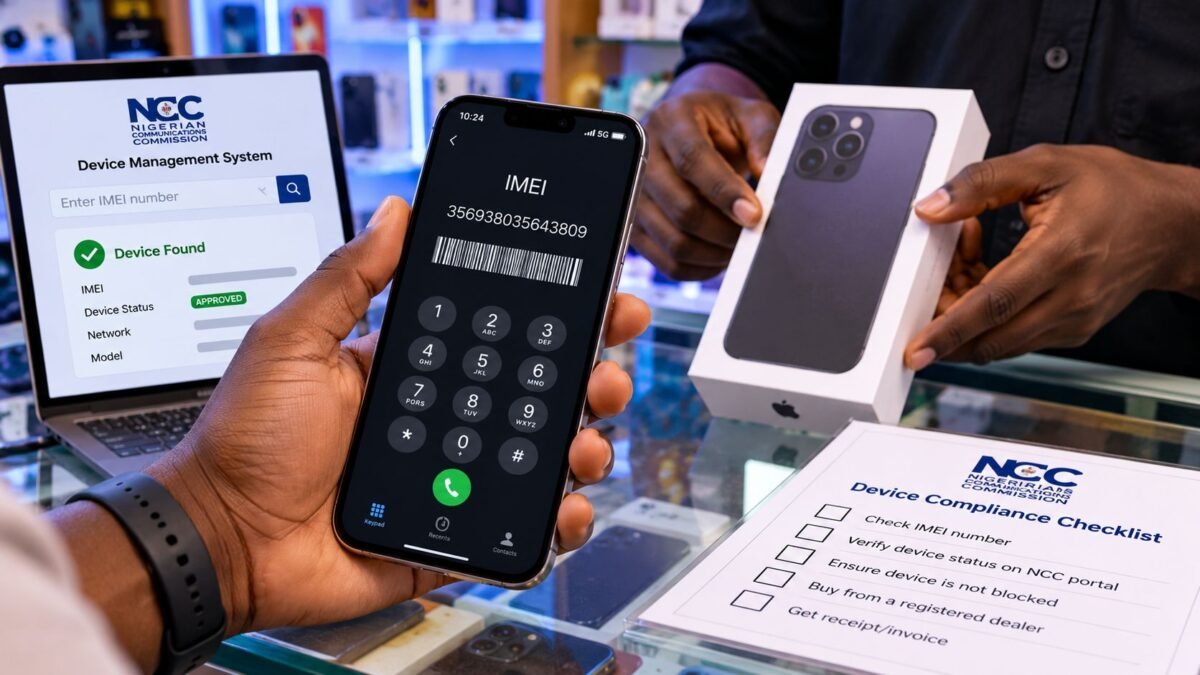
Buying a phone in Nigeria gets a new layer of risk from Monday, October 6, 2026, when the Nigerian Communications Commission’s deadline for phone makers, importers, dealers and vendors to register the IMEI numbers of devices in their stock on its Device Management System (DMS) runs out. The NCC has said devices that aren’t registered will be denied access to Nigerian mobile networks, which means the phone you buy from a shop shelf now needs to be in that register, not just look genuine.
The good news is that a phone already in your hand isn’t the target of this first phase, and you don’t need to panic about a handset you’ve used for years. What changes is how careful you should be with the next one you pay for, especially from roadside sellers, social media vendors and anyone offering a “new” phone well below the usual price. The checks below take a few minutes and can save you from a phone that works today and loses network later.
Why the IMEI now matters more than the box or the brand
Every SIM-enabled phone carries a 15-digit IMEI (International Mobile Equipment Identity), and dual-SIM phones carry two. The DMS records these numbers in a central register so the networks can tell which handsets are approved for use in Nigeria. Phones also have to be type-approved by the NCC before they can be sold, a rule that already existed under Section 132(2) of the Nigerian Communications Act 2003 and that the DMS is designed to help enforce.
The same register lets a stolen phone be blocked by its IMEI, so swapping in a new SIM won’t bring it back onto the network. When the DMS was unveiled in October 2025, NCC Executive Vice Chairman Aminu Maida said “substandard and fake devices can be prevented from connecting to the networks due to the harmful impact these devices have on the quality of services and online safety of the users”. For you as a buyer, that turns a cheap stolen or cloned phone from a bargain into a phone that could stop working at any point.
Run these checks before you pay for any phone in Nigeria
The one code worth memorising is *#06#, which works on Android phones and iPhones alike and doesn’t need data or airtime. If the IMEI on screen is missing, reads as a string of zeros, or doesn’t match the box, walk away. A mismatch can mean a replaced motherboard, a tampered phone or a box from a different unit, and none of those is worth the risk at the moment.
If you’re buying a UK-used or other fairly used handset, these checks sit alongside the usual ones. Our guide to checking a UK-used Samsung Galaxy before you pay covers locks and parts history, and it’s worth reading how to check a phone’s real battery health before you agree on a price.
What the NCC still hasn’t made clear for buyers
At the time of writing, the NCC hasn’t said exactly when networks will start blocking unregistered handsets, and it hasn’t explained how phones bought abroad or brought in by travellers will be treated. Importers and phone makers have also asked for more time and for a clear appeal process for phones whose IMEI is flagged by mistake, for example after a damaged board. Until those answers arrive, a dated receipt and a seller you can find again are your best protection.
The NCC’s own consumer guidance on counterfeit phones is a useful read alongside this, and if you’re shopping for a new budget handset, check whether the model has been quietly downgraded as well. The practical aim this month isn’t to delay buying a phone. It’s to buy one you can trace back to a real seller, with an IMEI that matches everywhere you look.

Join the conversation