

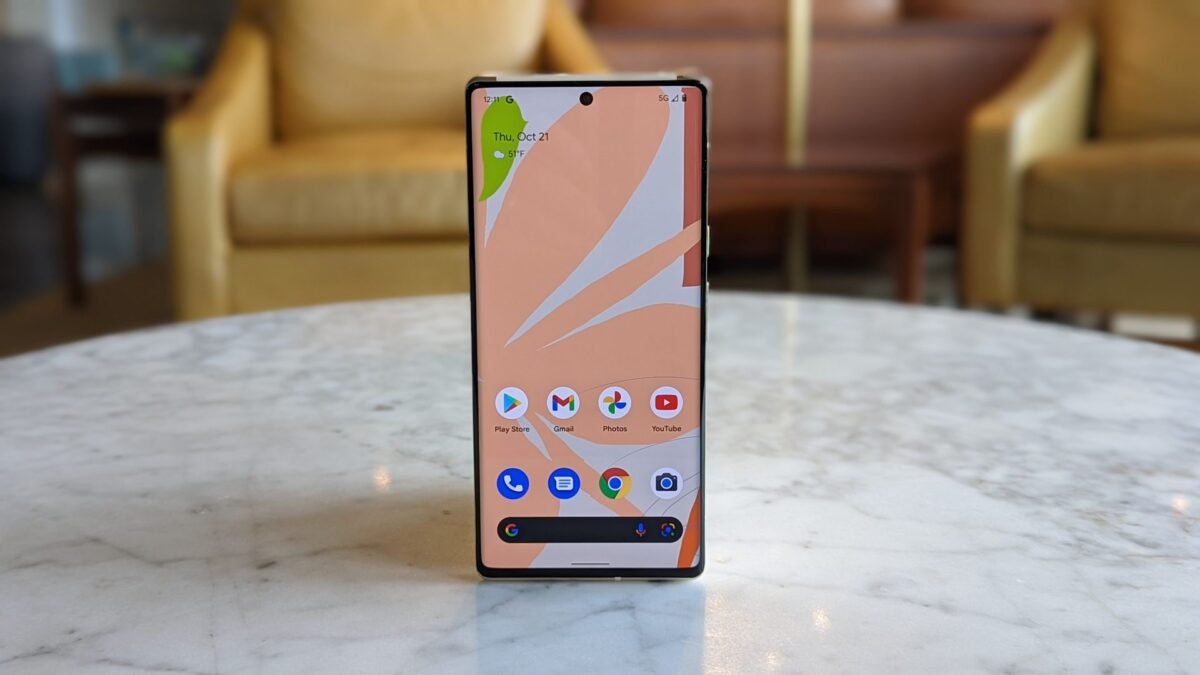
If you’re buying a UK-used Google Pixel in Nigeria, the date that matters most right now is October 2026, because that’s when Google’s five-year update guarantee for the Pixel 6 and Pixel 6 Pro runs out. Both phones first went on sale on the US Google Store in October 2021, and Google counts its update window from that month, according to its Pixel software update policy.
Google doesn’t list Nigeria among the countries where its store sells Pixel phones, so every Pixel you’ll find here is UK-used, US-used or imported by a dealer. That means nobody is checking update support, battery condition or carrier locks for you. The good news is that each of these takes a few minutes to confirm, and the checks below will tell you whether the Pixel in front of you is worth the price being asked.
Your Pixel 6 or Pixel 6 Pro is about to lose its update guarantee
Google promises the Pixel 6 and Pixel 7 families five years of Android and security updates, and the Pixel 8 and later seven years. Once that window closes, the phone doesn’t stop working, but Google no longer guarantees security patches or new Android versions for it. For a phone you’ll use for mobile banking, WhatsApp and your email, that matters more than any camera feature, because an unpatched phone becomes easier to attack over time and some apps eventually stop supporting older software.
Here’s when the guarantee ends for each Pixel you’re likely to see on sale in Nigeria, worked out from the US launch months Google publishes on its device availability page.
| Pixel 6 and 6 Pro | October 2026 |
|---|---|
| Pixel 6a | July 2027 |
| Pixel 7 and 7 Pro | October 2027 |
| Pixel 7a | May 2028 |
| Pixel 8 and 8 Pro | October 2030 |
| Pixel 8a | May 2031 |
| Pixel 9, 9 Pro XL | August 2031 |
| Pixel 9 Pro, 9 Pro Fold | September 2031 |
| Pixel 9a | April 2032 |
| Pixel 10, 10 Pro, 10 Pro XL | August 2032 |
| Pixel 10 Pro Fold | October 2032 |
| Pixel 10a | March 2033 |
The gap between the Pixel 7 series and the Pixel 8 series is the one to notice. A Pixel 7 bought today has about a year of guaranteed updates left, while a Pixel 8 has four years, which is a much bigger difference than the price gap between them usually suggests. A Pixel 6 may still receive an update this month, but that isn’t something you can count on after October, so don’t let it be part of the reason you pay a higher price.
Battery health only shows up on the Pixel 8a and newer
On a Pixel 8a or later, open Settings > Battery > Battery health and you’ll see a status of Normal, Reduced or Unavailable, with Battery capacity in the same menu. Google says a Reduced status means the battery is holding less than 80% of its original charge and should be replaced. It also says the Pixel 8a and later should keep up to 80% capacity for about 1,000 charge cycles, compared with about 800 cycles for the Pixel 3 through the Pixel 8 Pro, according to its battery health help page.
The catch is that the Pixel 6a, Pixel 7, Pixel 7 Pro, Pixel 7a, Pixel 8 and Pixel 8 Pro don’t show battery health at all. On those models you’ll have to judge the battery by how it behaves, so ask to use the phone for a while, watch how fast the percentage drops with the screen on, and feel whether it runs hot during light use. Our guide on checking a phone’s real battery health before you buy it walks through the practical tests you can do on the spot.
A used Pixel 6a comes with an extra battery question
Google pushed a mandatory Android 16 update to the Pixel 6a from July 8, 2025, to deal with an overheating risk on some units. On the affected phones, which Google calls Impacted Devices, new battery management features switch on after 400 charge cycles, and Google says owners may see reduced battery capacity and charging performance. Not every Pixel 6a is affected, but you can’t tell which one you’re holding just by looking at it, as Google’s Pixel 6a Battery Performance Program page explains.
The free battery replacement and compensation options that came with that programme ended on July 8, 2026, and walk-in replacements were only offered in a handful of countries that didn’t include Nigeria. In practice, a used Pixel 6a with shorter-than-expected battery life may be behaving exactly as Google’s update intended, and there’s no official fix left to claim. Price it with that in mind.
Carrier locks and warranty are where UK-used Pixels catch buyers out
Google says a Pixel bought from a mobile network rather than the Google Store can be SIM-locked for up to two years, and a locked phone only works with that original network until the lock is removed, as its carrier compatibility page notes. Don’t accept a seller’s word that a phone is unlocked. Put your own MTN, Airtel, Glo or T2 SIM in, make a call and load a web page on mobile data before any money changes hands.
Be careful with 5G promises too, because Google says not every Pixel works on every 5G network. A Pixel that shows 4G on your line is still perfectly usable, but don’t pay extra for 5G unless you’ve seen it connect on your network. For warranty, you can enter the phone’s IMEI at Google’s repair page to see what coverage is left, but since Google doesn’t sell Pixels in Nigeria, don’t assume that coverage can be used here. It’s the same logic we use for UK-used MacBooks, where the checks you do before paying count for more than any paperwork.
Which used Pixel still makes sense to buy in Nigeria
If you want a Pixel you can keep for several years, start your search at the Pixel 8 and work upwards, because those models carry Google’s seven-year promise and the 8a and newer let you see battery health in Settings. The Pixel 7 and 7a are fine for a year or two if the price reflects how little update support they have left. A Pixel 6 or 6 Pro only makes sense as a cheap phone you’re comfortable running without guaranteed updates, and you should be just as wary of any phone that’s been downgraded or tampered with before sale.
The practical aim isn’t to avoid older Pixels altogether. It’s to make sure the price you pay matches the years of updates and battery life the phone actually has left, and the model number, IMEI and a quick SIM test will tell you most of that before you hand over any money.






Join the conversation