

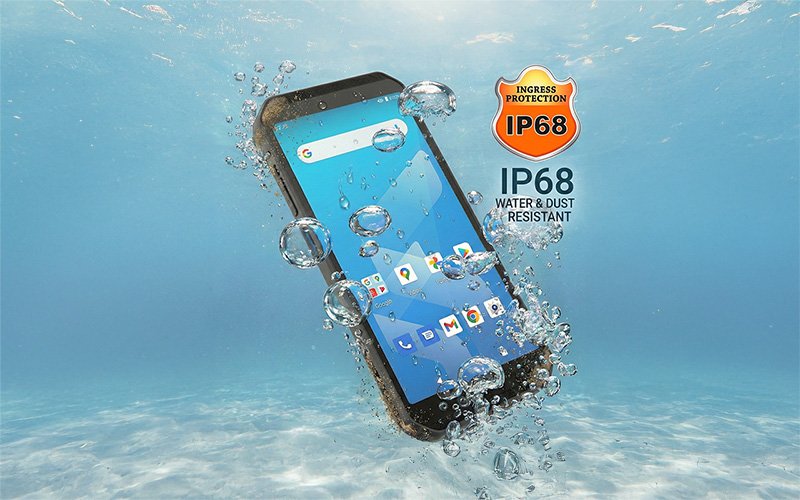
An IP68 phone in Nigeria is still not covered for water damage under its warranty, even when the box promises protection at six metres. Tecno’s own product page for the IP68 and IP69-rated Spark 50 Pro ends with the line “Liquid damage not covered”, and Carlcare’s Nigerian service policies for both Tecno and Infinix exclude damage caused by “liquid contact”.
The rating is still worth having, but you should treat IP64, IP68 and IP69 as protection against accidents rather than permission to take your phone into water. Once you know what each number covers and where the warranty stops, you can choose a phone that matches how you actually live, especially if you’re out in the rain often or work near water.
What the two numbers in an IP68 rating actually mean
An IP rating has two digits. The first is for solids such as dust, and a 6 means the phone is dust-tight. The second is for water, and it’s the one most buyers care about. A 4 means the phone resists splashes from any direction, a 7 means it survived immersion in up to one metre of water for 30 minutes in testing, and an 8 means it passed a tougher immersion test whose depth and time are set by the manufacturer. A 9 covers close-range, high-pressure and high-temperature water jets, which is why you’ll see some phones carry IP68 and IP69 together.
Those tests are done on new phones in controlled conditions, usually with still, fresh water. They don’t account for seawater, pool chlorine, soapy water, a dropped phone with a hairline crack, or seals that have aged after a year of charging in a hot room. That’s the gap the warranty fine print is protecting the manufacturer against.
Tecno Spark 50 vs Spark 50 Pro shows how far the ratings differ
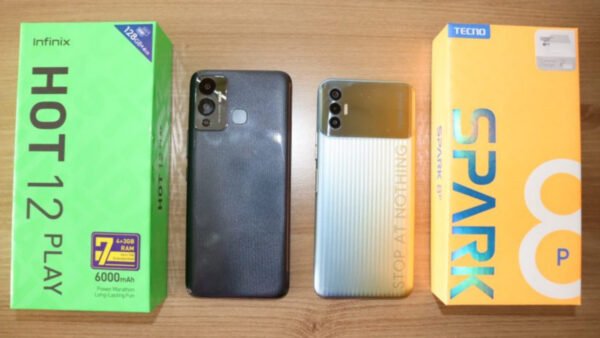
Tecno’s current Spark line is a useful example because two phones from the same series sit far apart on water protection. The Spark 50 product page lists IP64 dust and water resistance, which covers splashes and rain, while the Spark 50 Pro product page claims IP68 and IP69, with immersion testing at six metres for 30 minutes.
| Features | Tecno Spark 50 | Tecno Spark 50 Pro |
|---|---|---|
| Water Resistance | IP64 (dust-tight, splash resistant) | IP68 and IP69 (6m for 30 minutes in testing) |
| Drop resistance | Up to 1.8m (Tecno claim) | — |
| Chipset | MediaTek Helio G81 | MediaTek Helio G100 |
| Display | 6.78-inch, 720 x 1600, 120Hz | 6.78-inch HD+, 120Hz |
| Battery | 7,000mAh | 6,000mAh |
| Charging | 18W | 60W |
| Warranty note | — | Liquid damage not covered (Tecno) |
Read the Spark 50 Pro’s footnote in full and it’s more cautious than the headline. Tecno says the phone is “Not a professional waterproof device”, tells owners “Do not submerge or expose to liquids” and “Do not charge wet”, and adds that “Protection not permanent”. So the IP68 phone gives you a much better chance of surviving a fall into a bucket or a heavy downpour, but if water does get in, the repair is on you. If you’re weighing the cheaper model, our Tecno Spark 50 buying verdict covers which RAM version is worth paying for.
Why Carlcare will still charge you for a wet phone
Carlcare is the official after-sales service for Tecno, Infinix and itel in Nigeria, and its Tecno service policy gives smartphones a 13-month handset warranty, including the built-in battery. The same policy lists damage “caused by accident, abuse, liquid contact, fire, earthquake or external cause” among the things the warranty doesn’t cover, and the Infinix policy, which gives a 12-month handset warranty, carries the same liquid-contact exclusion.
If a technician finds moisture or corrosion inside the phone, expect it to be handled as an out-of-warranty repair, whatever rating is printed on the box. That’s also worth remembering when you’re buying second-hand, so add signs of water exposure to the checks in our guide to buying a used Tecno or Infinix phone.
What to do in the first hour if your phone gets wet
Carlcare’s advice for a wet phone is to take it out of the water quickly, power it off straight away, and keep it away from hair dryers, microwaves and ovens, because heat can warp internal parts. It also advises against a bag of rice, saying rice “lacks the ability to create enough airflow for proper drying” and warning that small particles can get into the ports. It recommends sealing the phone with silica gel packs for at least 24 hours or letting it air-dry for around 48 hours in a warm, dry place, as set out in its guide to water-damaged phones.
Don’t plug it in to “see if it still works” while the port is damp, because charging a wet phone is exactly what Tecno’s own fine print tells you to avoid. If the speaker sounds muffled after a splash, give it time to dry before you assume the worst, since Tecno notes that water may affect audio and that this is restorable after drying.
Do you really need an IP68 phone in Nigeria?
If you mostly use your phone indoors and on the road, IP64 or a similar splash rating handles rain, a spilled drink and sweaty hands, and you don’t need to pay extra for more. If you ride okada or keke daily, work at a market or construction site, or have children who drop things into buckets, an IP68 phone is worth it because it raises the odds of surviving the accident that does happen. Neither rating will save you a repair bill if water gets in.
The practical aim isn’t to find a phone you can swim with. It’s to choose the level of protection that fits your day, keep the phone dry where you can, and know that the warranty covers faults, not water.

Join the conversation